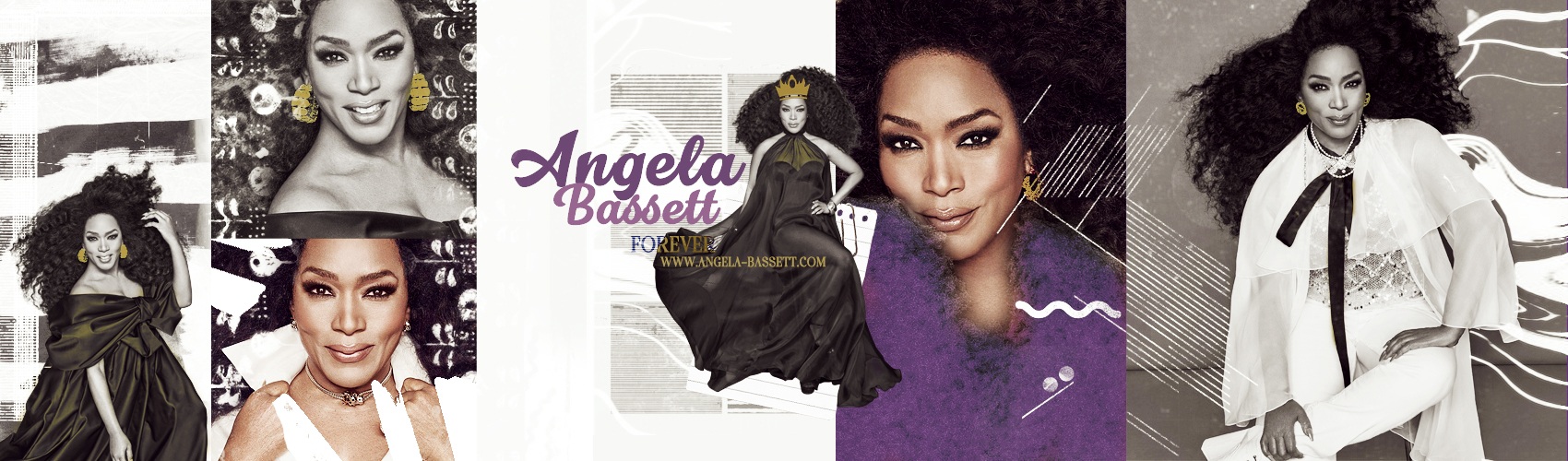

elcome to Angela Bassett Forever, your online resource dedicated to Angela Bassett. You may better remember her as Queen Ramonda in Marvel's Black Panther, Wakanda Forever, Avengers Saga or Athena Grant in 9-1-1. Angela spans her career from big to small screen, seeing her not only in movies like What's Love Got to do with it, How Stella got her groove back, Contact, Waiting to Exhale, Akeelah and the Bee, Mission: Impossible, she also played some iconic roles for series like American Horror Story and Close to the Enemy. Recently she played President Evelyn Mitchell in Zero Day, and had a crossover episode in Doctor Odyssey. This site aims to keep you up-to-date with anything Mrs. Bassett with news, photos and videos. We are proudly PAPARAZZI FREE!

Wildwood
2026
Iphigenia
The adventures of Prue McKeel as she sets off to the forests outside Portland to find her kidnapped brother.

9-1-1
2018-2025
Athena Grant
Explores the high-pressure experiences of first responders who are thrust into the most frightening, shocking, and heart-stopping situations, day after day.

Mission: Impossible – Final Reckoning
2025
Erika Sloane
Our lives are the sum of our choices. Tom Cruise is Ethan Hunt in Mission: Impossible - The Final Reckoning.

Doctor Odyssey
2025
Athena Grant
During Casino Week on The Odyssey, Athena Grant spots two suspicious passengers eyeing the vault. She teams up with Max to counter their plans in a high-stakes gamble.

Moon Girl and Devil Dinosaur
2025
Decoy (voice)
After 13-year-old super-genius Lunella accidentally brings ten-ton T-Rex Devil Dinosaur into present-day New York City via a time vortex, the duo works together to protect the city's Lower East Side from danger.


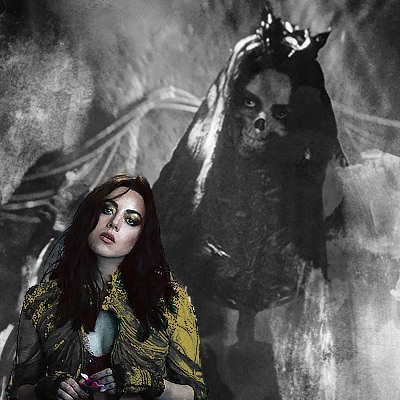



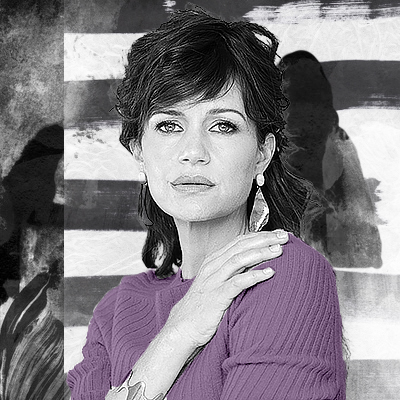

image source
If you have photos or videos of Angela Bassett you have taken personally or collected during the years and you wish to donate them to the site, read how to do and get in touch with us.


This fansite is strictly against any paparazzi or stalkerazzi pictures. We will not support any kind of bashing or privacy intrusion into Michelle life and/or the one of people around her. We will also not post any gossip or rumors on private life matters.
She, Tina
Martin Booe
June 15, 1993
Article taken from The Washington Post
LOS ANGELES — Angela Bassett has played a lot of wives. In “Boyz N the Hood,” she was Larry Fishburne’s ambitious ex. Then she was Betty Shabazz, the fiercely loyal companion to Denzel Washington in “Malcolm X.” An “I do” later found her playing mom to a brood of Jacksons, as in Michael and Janet, in the ABC miniseries “The Jacksons: An American Dream.”
Now, as wife roles go, Bassett has taken on the longest and sufferingest of them all. As Tina Turner in the new Disney bio-pic “What’s Love Got to Do With It,” Bassett endures 18 years of abuse from husband and SOB cum laude Ike. The film is based on the book “I, Tina,” in which Turner chronicled her miserable marriage. Though Bassett has found herself going retrograde in the sphere of on-screen marital bliss, with this film she may establish herself as one of the all-too-few black actresses who carry the same clout as male counterparts Fishburne (who plays Ike) and Washington.
No wonder then that the 34-year-old actress is, well, a little wound up. Although her career has been marked by a steady upward progression — from Yale Drama School to recurring appearances on “The Cosby Show” and a stint on the soap “Guiding Light” — this is her first star turn. Today, in the suite of a Hollywood hotel, she can barely stay seated. She often leaps to her feet and jabs at the air, flouncing her shoulder-length cornrows and black-gold floral dress. She does little dances; she whoops and hollers. She hardly ever just tells you things — she acts them out for you. When she laughs, it’s from the wellspring. In film she is striking, but in person she is beautiful — radiant, in fact.
But make no mistake: Being Tina Turner takes a lot out of a woman, and Bassett still tenses up at the memory of her trepidation.
“It was a little scary,” the actress says. “I felt a great responsibility to tell her story and tell it as eloquently as I could” — she puts a quivery emphasis on the last few words — “so that she of all people could look at me in it and say, ‘She cared.’ I only spent about 24 hours total with {Turner}, but she was so supportive and loving and wonderful.”
Wonderful Turner may be, but she who would fill the pop diva’s shoes clearly has to find her balance on some pretty high heels — all the more so since their original owner is not only alive but kicking. Turner’s occasional visits to the set invariably got Bassett all aflutter.
“We had to deal with history as it was, history as we remember it, and history as we would want it to be,” Bassett says. “She’d come on the set and see me in some wild little miniskirt, and say, ‘I never wore anything like that! I always wore beautiful, beautiful, beautiful!’ And then the next day she’d have taken a look at old pictures, and it’d be, ‘I thought it was cute at the time, but when I look back at those pictures …”
It’s tempting, of course, to cast Bassett as a standard-bearer for contemporary black actresses, if not black women in general — at least as portrayed in film. But Bassett isn’t particularly interested in placing her characters in the social landscape. She’d much rather talk about acting.
“People come up to me and say, ‘Keep doing what you’re doing,’ ” she says. “I’m not always sure what they’re responding to, because I’ve played these really wonderful women, and they’re strong in their own right, and okay, I’m proud of them. But I asked myself, ‘Do I always have to play characters like this?’ ”
The story of Tina Turner, both in life and in drama, is ultimately one of empowerment. Her journey, however, was long and often dark, marked by self-denial that frequently edged into self-sacrifice, as Ike (in the movie, anyway) degenerated from an already less-than-sympathetic character into a tyrannical, coke-addled fiend, given to venting his rage on the one person who stood loyally beside him. Triumph comes late and at a dear price: 18 years of punishment.
The film’s challenge — and especially Bassett’s — was to gird the main character against total victimization. And as it happened, wringing the victim out of the filmic Tina Turner took 17 script rewrites. “The very first drafts of the script suffered from all the predictable problems of a stereotypical victim,” says director Brian Gibson (HBO’s “The Josephine Baker Story”). “You got impatient with the character. As a reader, I felt that I didn’t understand why she stayed with Ike for all those years … and that’s what we set out to work on.”
Screenwriter Kate Lanier was brought in to give the story a woman’s point of view. Breakthroughs came slowly but surely. “Having Larry be a charismatic Ike was probably the biggest breakthrough,” says Gibson. “Without it, you wouldn’t have believed the relationship.”
Fishburne was by many accounts initially less than enthusiastic about the project; he felt that Ike’s character in earlier versions was one-dimensional. “I think the fact that we cast Angela had everything to do with Larry signing on,” Gibson says. “The other important thing was charting the desertion theme to the movie.”
Ah, the “desertion theme.” If the success of Bassett’s performance can be boiled down to a single point, it would have to be her reading of that. In the end, it was Turner’s indefatigable loyalty — her refusal to desert Ike — that was almost her undoing. This might have been interpreted as a weakness, but Bassett read it as a latent strength that, turned around, ultimately set Turner free. In the end, faced with her own destruction, her first loyalty was to herself. So if audiences are still left wondering why Turner endured so many years with Ike, Bassett has her own answers.
“For me, it was like she was on a roller coaster. First it’s ‘Isn’t this fun — we’re going up, up, up,’ and then you get to the top and you’re going down.” Bassett lets out a window-rattling shriek: “What am I doing here!” Her eyes flash with wonder, terror. “And it’s too late to get off!”
The key, she says, is the point early in the movie when Ike is making his first advances toward the teenage Tina. “He tells her, ‘I’ve helped so many people and they always leave me.’ And she says, ‘I wouldn’t do that. I wouldn’t do that.’ When people you love desert you, she knew what that was like. Her own parents left her alone when she was just a little girl. So he’s let her see a part of him that he’s never let anybody see before, and she doesn’t know she’ll never see it again, but she’s always looking for it.”
As if the dramatic demands of “What’s Love Got to Do With It” weren’t enough, Bassett endured physical rigors that might have felled an actress of lesser stamina. Not the least of these was mastering the strenuous choreography of Turner’s dance routines. To re-create the youthful Turner’s sinewy physique, Bassett spent hard time at the gym; it left her with a souvenir pair of pretty mean biceps. She studied videos and worked with a dialect coach. Even the lip-syncing for the film’s production numbers required hours of practice to capture Turner’s extemporaneous fills between verses.
“I’d go home after midnight, having to be back on the set in six hours. What do you do? Go to sleep? I’d put the tapes on the boombox and go to bed and just listen to it, try and let it go into my subconscious.”
Then there were the repeated beatings her character suffers at the hands of Ike. Surely, they must have been draining. But …
“I love to cry!” laughs Bassett. “I’m used to that kind of thing.” In the line of cinematic duty, anyway.
She admits, however, that “sometimes it was a drain. Like when he drags her down the hallway — I fractured my left knee and injured an elbow in the audition.”
To minimize wear and tear on their stars, the filmmakers sometimes resorted to using stunt people for the fight scenes, leaving Bassett to fill in with the screaming. “There I’d be at the microphone: Aah! Aah! Get back in there! Aaaaagh!” (At this point in the interview, a visit from hotel security would hardly be a surprise.) “I’d get worked up into such a state that Larry would come up and hold me in his arms like a little baby, saying, ‘That’s okay, it’s okay.’ ”
“The two of them brought something special to the picture — probably because they’d worked together before {in “Boyz N the Hood”},” says Gibson. “There is a very extraordinary thing. … They would do a rape scene 16 times, and he would appear to be strangling her. I’d shout ‘Cut!’ before they injured one another, and instantly they’d just touch one another. There was a certain communion of respect. It never got into that ugly Method thing.
“A very important part of her success is outspokenness,” Gibson continues.
Back to Bassett: “Arrrgh, arrrgh, arrrgh!” she screams, still demonstrating a tussle with Fishburne. You can take the actress out of the movie, but you can’t take Tina out of the actress.
Script developed by Never Enough Design
Wildwood
2026
Iphigenia
The adventures of Prue McKeel as she sets off to the forests outside Portland to find her kidnapped brother.
9-1-1
2018-2025
Athena Grant
Explores the high-pressure experiences of first responders who are thrust into the most frightening, shocking, and heart-stopping situations, day after day.
Mission: Impossible – Final Reckoning
2025
Erika Sloane
Our lives are the sum of our choices. Tom Cruise is Ethan Hunt in Mission: Impossible - The Final Reckoning.
Doctor Odyssey
2025
Athena Grant
During Casino Week on The Odyssey, Athena Grant spots two suspicious passengers eyeing the vault. She teams up with Max to counter their plans in a high-stakes gamble.
Moon Girl and Devil Dinosaur
2025
Decoy (voice)
After 13-year-old super-genius Lunella accidentally brings ten-ton T-Rex Devil Dinosaur into present-day New York City via a time vortex, the duo works together to protect the city's Lower East Side from danger.
image source
If you have photos or videos of Angela Bassett you have taken personally or collected during the years and you wish to donate them to the site, read how to do and get in touch with us.
This fansite is strictly against any paparazzi or stalkerazzi pictures. We will not support any kind of bashing or privacy intrusion into Michelle life and/or the one of people around her. We will also not post any gossip or rumors on private life matters.